18th September 2026 | By Admin
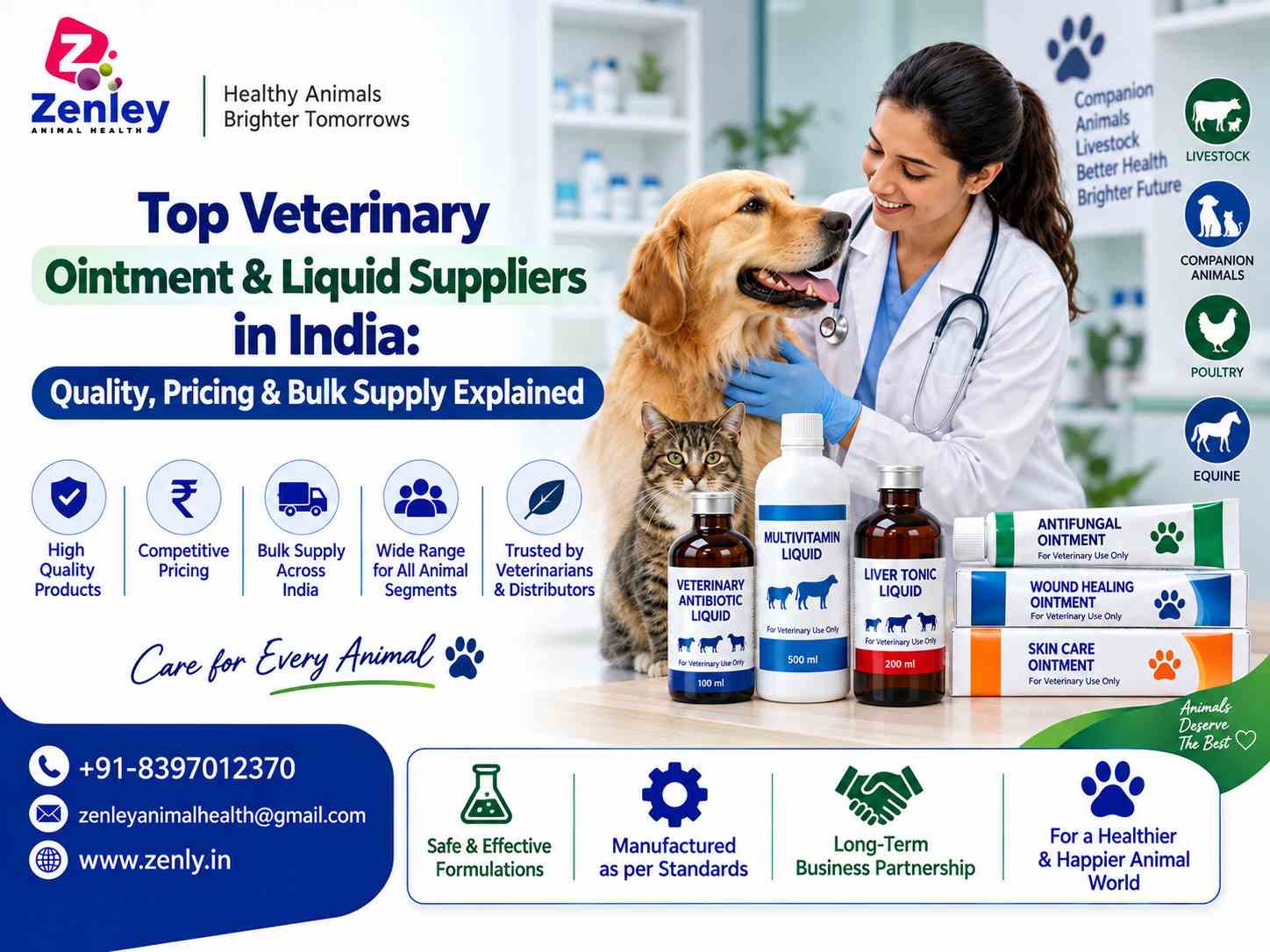
The Veterinary Liquid Suppliers are now a significant player in the animal health care market in India, as farmers and other consumers in companion animal clinics need easy access to products such as injectables, oral suspensions and topicals. However, unlike in the human medicine market, some specific requirements in veterinary liquid formulations cannot be compromised upon, including dosage according to different species, palatability and the time period after which an animal can be slaughtered or milked. Furthermore, packaging requirements and cold chain logistics in tier 2 and tier 3 locations have also become important because most of the rural stockists do not have constant refrigeration facilities.
Ultimately, this article explores the way Veterinary Liquid Suppliers function within India's B2B animal health ecosystem and the factors that need to be considered by the buyer in this context, whether they be PCD franchise partners, veterinary distributors or hospital procurement teams. The veterinary pharmaceutical industry in India has been developing alongside an increase in dairy output, commercial poultry, and pets in urban environments. Liquid formulations make up a significant portion of demand in the industry. A reliable supplier is usually licensed according to the WHO-GMP and Schedule M norms, utilizes DCGI-approved formulations and is able to provide a Certificate of Pharmaceutical Product (CoPP) upon request. In addition to meeting these criteria, the reliability of suppliers is determined by their ability to ensure consistent quality from one batch to another, as animal medicines tend to be ineffective because of inconsistency rather than flawed design.
A trusted Veterinary Ointment Company must be able to provide not just one best selling veterinary ointment, but an entire range of products including veterinary ointments that will treat wounds, skin fungi, mastitis and other dermatologic issues in cattle, poultry and companion animals. If considering a manufacturer, make sure whether the ointment base used by the company suits the target species because the base that works effectively for cowhide does not work in the same way in small animals. A good company always provides information regarding the stability of the product within different climate zones of India. For PCD partners, monopoly based territory rights paired with a diverse Vet Ointment catalogue usually indicate a manufacturer serious about long-term brand building rather than bulk orders.
Eye drops have to be more sterility-controlled compared to other types of topicals, meaning that a Vet Eye Ointment Supplier should provide aseptic processing and sterility test documentation rather than a generic GMP certificate. During the selection of a Veterinary Eye Ointment Supplier, ask for the documentation on the preservative compatibility tests, because some preservatives used in skin ointments may irritate the cornea. Buyers should also confirm tube sealing quality and tamper-evidence, as leakage during transport is one of the most common complaints distributors raise about eye-care products moving through India's long-haul logistics network. A supplier that documents shelf-life stability under real storage conditions — rather than only accelerated lab testing — tends to perform more reliably once products reach field-level stockists in smaller towns.
Wound management is one of the highest-volume categories in Indian veterinary practice, particularly for cattle and working animals prone to injury. The company producing the Veterinary Wound Ointment PCD needs to provide scientific justification for its active components. Usually, combinations of elements such as povidone-iodine, zinc oxide, and antimicrobial peptides are widely used, but their concentrations and carriers decide the real rate of healing. In cases when there is a chance of infection, the customers demand a Vet Approved Antibiotic Ointment Supplier, which can provide information on antimicrobial sensitivity and withdrawal periods, especially in dairy and meat cattle, since it involves food safety issues. It should be mentioned that nowadays the application of antibiotics in livestock becomes increasingly controlled by the authorities, so such suppliers as those, that have responsible usage labelling and dosage charts, win the confidence of veterinarians.
Price Structure of Veterinary Antibiotic Ointments will depend on the quantity ordered, whether the raw materials used in making the product are imported or locally sourced, and how they are packed. The buyer seeking bulk supplies should request that they given different price tiers depending on the quantity purchased. Furthermore, there should be information on the delivery times for the peak seasons when demand will spike. It also pays to confirm whether the manufacturer maintains buffer stock for fast-moving SKUs, since stockouts at the distributor level directly damage a PCD franchise's credibility with retail chemists and veterinary clinics. It is vital to have all the terms related to payment procedures, FOB transactions, and damaged goods policies stated in written form before the placement of the first bulk order.
Veterinary Ointment PCD Franchise has become popular due to the fact that it allows regional distributors to create their own range of branded products without having any production expenses, whereas the parent company takes care of the formulation and registration. This model works best when the franchise partner receives genuine marketing support — visual aids, product literature and MR (medical representative) training materials — rather than just a price list and a product catalogue. Veterinary Medicine Distributor evaluating a franchise opportunity should also check whether the principal company enforces monopoly territory rights strictly, since overlapping distribution rights are one of the most common sources of channel conflict in India's B2B pharma space. A transparent franchise agreement, backed by consistent product supply, tends to outperform aggressive short-term discounting in building a durable regional business.
Q1. How will I ensure that the Veterinary Liquid Supplier is a genuine GMP certified supplier?
Get their latest WHO-GMP or Schedule M certification along with the manufacturing license number and batch test reports. Verify the license number through the state drug control body website before ordering in bulk.
Q2. What all documents do I need to ask for before taking up a Veterinary Ointment PCD Franchise?
I need to ask for the franchise agreement, list of products along with their MRPs, proof of monopoly, GMP and DCGI approval, and sample product literature. Also, check the minimum order quantity and payment terms.
Q3. Why is there a huge difference in prices of Veterinary Antibiotic Ointment Suppliers?
The reason behind the difference in price of these products is the source of raw materials (imported or domestically made API), batch size, quality of packaging and documentation.
Selecting from the top Veterinary Liquid Suppliers in India depends on proven compliance, reliable batch-to-batch quality and an agreement based on reliable documentation as opposed to verbal agreements. When considering a supplier for either your basic Vet Ointment needs or Vet Eye Ointment Supplier requirements, or when looking into the viability of a Veterinary Ointment PCD Franchise business, the basics remain the same: look at the documents, test the product, and make sure that the manufacturer can really live up to their promise when the going gets tough.
Must Read: Top Veterinary PCD Franchise Company in Manipur
Your trusted partner for premium veterinary products. Experience 100% quality, efficacy, and reliability with every solution we offer.

© 2024-26 Copyright Zenley Animal Health Designed and Developed By Rednirus Digital Media
.png)